Get your Specification Package Today!
Getting started with your solar lighting specification package is simple. Provide your project site address and, if available, an AutoCAD file of the area, and we’ll prepare a lighting plan designed to meet your required light levels. Using AGI32, our team will model the site, confirm that illuminance levels align with your standards, and refine pole placement, fixture selection, and mounting heights.
Once the design is complete, we’ll deliver a full specification package, including the AGI32 photometric layout in both CAD and PDF formats, along with complete system specifications for all recommended equipment. To get started, just fill out the form below with your project details, and we’ll handle the rest.
SEPCO needs the contact information you provide to us to contact you about our products and services. You may unsubscribe from these communications at any time. For information on how to unsubscribe, as well as our privacy practices and commitment to protecting your privacy, check out our Privacy Policy.
Frequently asked questions for getting Specification Package completed
What Are Some Common Mistakes to Avoid?
Even with cooperative contracts, small missteps can slow things down:
- Not confirming contract eligibility upfront
- Selecting a contract that doesn’t match your scope
- Skipping vendor consultation
- Overlooking installation planning
Taking a little extra time early can prevent delays later.
What is a lighting plan (photometric plan)?
A lighting plan, often called a photometric plan, is a detailed layout that shows exactly how light will perform across your site before installation.
It typically includes:
- Fixture locations and pole placements
- Light levels (foot-candles or lux)
- Uniformity ratios (how evenly light is distributed)
- Bright spots, dark areas, and overlaps
- Mounting heights and fixture specifications
These plans are generated using professional software such as AGi32, which predicts how lighting will behave in real-world conditions.
Why is a lighting plan important, especially for solar lighting?
A lighting plan removes guesswork and ensures your investment performs as expected.
Key benefits:
- Confirms you are getting the light levels you’re paying for
- Shows coverage, dark zones, and safety visibility before install
- Optimizes pole height, spacing, and fixture selection
- Prevents over-lighting (wasted budget) or under-lighting (unsafe areas)
- Helps meet code, IES, or municipal requirements
- Reduces costly changes after installation
Lighting simulation tools like AGi32 allow designers to visualize and verify lighting performance in advance, ensuring the system performs exactly as intended. A lighting plan validates both cost and performance, ensuring the system you purchase is worth the investment.
What information is needed to create a lighting plan?
To produce an accurate lighting design, the following inputs are ideal:
Site & Layout
- AutoCAD files (.DWG or .DXF preferred)
- PDF site plans or satellite images (if CAD not available)
- Dimensions, boundaries, and layout details
AutoCAD files are commonly imported into lighting software to create accurate models of your site.
Lighting Requirements
- Target light levels (example: parking lot, pathway, security)
- Uniformity expectations (even lighting vs highlight areas)
- Applicable standards (IES, local codes, etc.)
Operational Requirements
- Runtime expectations / Hours of operation (dusk-to-dawn, motion-based, partial night)
Equipment Preferences
- Pole height or allowable range
Site Constraints
- Obstructions (buildings, trees, terrain)
- Shading (especially critical for solar)
- Property lines and light trespass restrictions
Aesthetic Considerations
- Pole style, color, or decorative requirements
- Fixture appearance or architectural guidelines
What does AGi32 or lighting simulation actually show?
Lighting software like AGi32 builds a 3D model of your site and simulates real fixture performance using manufacturer data.
It calculates:
- Illumination levels at specific points (like virtual light meters)
- Coverage patterns and uniformity
- Impact of obstructions, shadows, and reflections
- Glare, light trespass, and energy usage
AGi32 is widely used to predict how much light reaches the ground and visualize results before installation, ensuring performance accuracy.
What files or formats can you work with?
We can typically work with:
- AutoCAD files (.DWG / .DXF) (ideal)
- PDF plans
- Site sketches or aerial images
- Basic descriptions + dimensions
Providing more detail leads to a more accurate and optimized design.
How does a lighting plan help control costs?
A lighting plan ensures you’re not overspending, or underspending.
It helps:
- Eliminate unnecessary fixtures
- Optimize pole spacing and height
- Select the right output and optics
- Avoid expensive redesigns or retrofits
Lighting simulations reduce cost by avoiding overdesign while ensuring proper coverage.
This is especially critical in solar lighting, where system sizing (panel, battery, runtime) directly impacts cost.
What are common mistakes without a lighting plan?
Skipping a lighting plan often leads to:
Design Mistakes
- Poor pole spacing → dark gaps or over-bright zones
- Incorrect pole height → glare or uneven coverage
- Ignoring uniformity → unsafe conditions
Improper spacing alone can cause dark zones or unnecessary costs depending on layout decisions.
Solar-Specific Mistakes
- Installing lights in shaded areas
- Undersized batteries for required runtime
- Incorrect solar panel orientation
Installation Issues
- Not accounting for site conditions or obstructions
- Misaligned system expectations vs performance
- Over-reliance on “rule of thumb” instead of data
These mistakes are common and can severely reduce performance if not addressed in design.
What does a completed lighting plan deliver?
A professional lighting plan includes:
- 📍 Fixture layout with pole locations
- 📊 Light level grid (foot-candles or lux)
- 🎯 Uniformity ratios and performance summary
- 🌈 Color or contour maps showing light distribution
- 📋 Fixture schedule and specifications
- 📐 Mounting heights and aiming details
These outputs allow you to clearly understand how the system will perform before purchase and installation.
Can the plan be adjusted if requirements change?
Yes. Lighting plans are flexible and can be optimized by adjusting:
- Pole height
- Fixture output or optics
- Layout and spacing
- Runtime or solar system sizing
This iterative process ensures the final system meets both performance goals and budget.
Is a lighting plan really necessary for smaller projects?
Even small projects benefit from a plan—especially solar—because:
- Solar lighting has stricter energy limits
- Poor design is harder to correct after installation
- Layout efficiency directly affects cost
When should I request a lighting plan?
You should request a lighting plan:
- Before purchasing equipment
- During budgeting or proposal stages
- When comparing multiple solutions
The earlier it’s done, the more it protects your investment.
Latest Collection
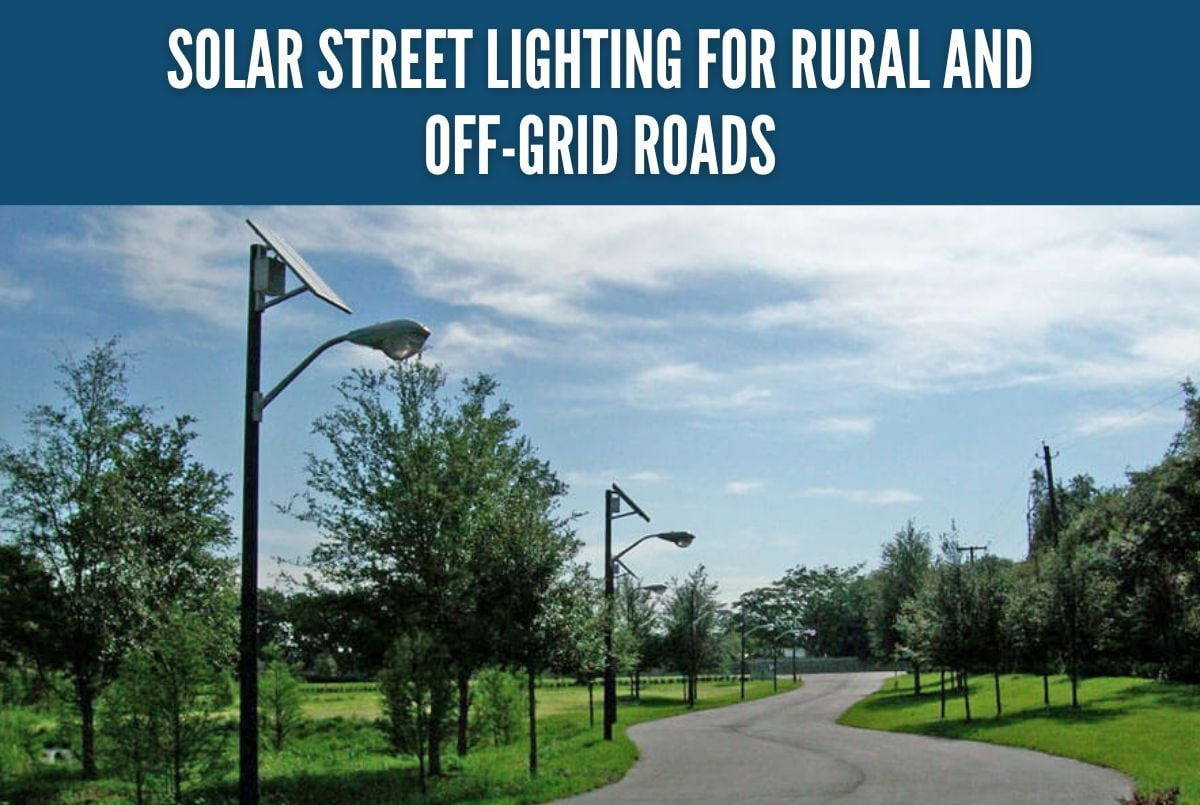
Solar Street Lighting for Rural and Off-Grid Roads
Lighting plays a pivotal role in the safety and functionality of any community, and rural areas are no exception. In many remote regions, the absence...