
Contents
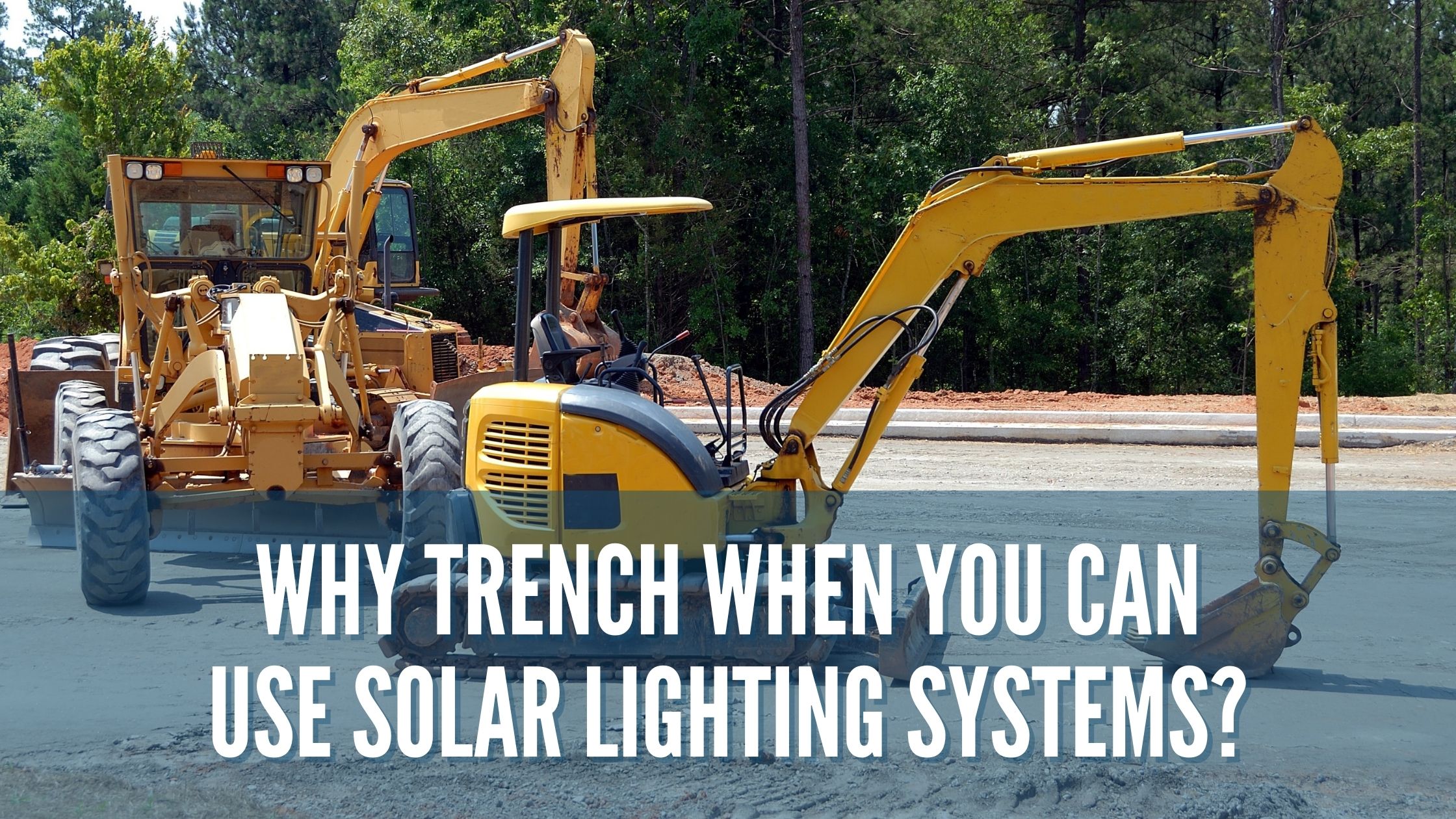
One of the largest costs associated with new lighting projects is the cost of trenching in the electricity from the main source. Trenching not only costs more, but it tears up the surrounding area and damages landscaping, structures, and pathways. This can be the most costly part of a lighting project since all surrounding areas now need to be repaired.
Why not go solar instead and redistribute the money used for expensive trenching and put it into a renewable resource with an actual payback?
Many times, the lighting is the last part of a project such as parking lots, roadways, signs, and many other projects. Once the lighting needs are discovered, trenching of the power is needed to provide power to the new lights. Imagine trenching through a new parking lot, tearing up all that freshly poured concrete just to bring in power lines.
Not only does it cost for the equipment, but also repairing the damages to the parking lot, installing of the new lights, and now you have to pay the electric company every month for the electricity used by the fixtures.
Instead, solar lights are completely self-contained and installed at the top of the pole. The solar panel feeds the battery assembly during the day and the lighting controller turns on the light at dusk, drawing its power from the solar-charged battery, for whatever operating profile is needed for the application.
All the wiring is located at the top of the pole and therefore no trenching is required. The only installation required is the pole, which can leave the surrounding area undisturbed. And after a few short years, the lights start paying for themselves since there are no electrical costs associated with solar lights.
Best of all, the low maintenance factor of solar lighting systems will allow for years of operation with no need to hire someone to come out and change out the lamps, photocells, etc. The only maintenance is the battery replacement, which if sized correctly, should be every 5+ years.
With solar costs going down and solar panel efficiency going up, going solar is becoming more popular. LEDs are becoming more efficient, providing more lighting than ever before, and have a life expectancy typically of 20+ years. Using solar lighting systems is starting to become more and more popular while becoming smaller and lower cost. So why trench...use solar light systems instead.
