Contents
No matter what type of space you are trying to light up, whether residential or commercial, it can be expensive. The cost of bringing in the traditional grid power extensions, trenching the area to install underground cables, wiring, equipment, installation, and finishing can make the lighting a very expensive project to implement. After all that is said and done, you then have to deal with the monthly energy costs. Depending on the type of lighting you install and the wattage of the fixtures, this can eat up a budget quickly.
Instead, going with a solar outdoor lighting system to provide the required light can greatly reduce the project costs, help improve the environment, and keep electrical costs in the bank where it belongs. Solar outdoor lighting systems do not require any additional trenching or wiring since each unit provides its own power.
The solar system produces the energy stored in batteries to be used by the fixtures at night. This is all installed on a single pole, and no additional trenching between poles is required. Installation is simple since all you must do is set the pole and install the system. The light works on its own without the need for any additional resources, clocks, timers, or anything.
There are a couple of different types of solar outdoor lighting systems used in various applications. Let’s take a quick look at the two most popular; residential and commercial.
Residential Solar Outdoor Lighting Systems
There are many small outdoor solar lights for homeowners to use on their properties, and they are very simple to install. The most common solar lighting system mounts on a stake that gets installed anywhere the light is required, with the solar panel mounted on the top of the fixture.

There are also building-mounted and roof-mounted solar lighting systems for floods and security needs. These are typically motion activated and only operate when people are detected. These are perfect for added security lighting around a home or property.
These systems are easily found online and at big box retailers. Their costs are low and are usually replaced every couple of years since maintenance isn’t traditionally thought of, and spare parts are not as common. If you are handy enough, you may be able to replace a battery on these units.
Commercial Solar Outdoor Lighting Systems
The large-scale solar lighting systems for outdoor areas, such as parking lots, streets, security, signs, etc., require much more powerful lights than only a commercial solar light manufacturer can provide. These lights must provide adequate lighting determined by the IESNA and meet specific foot candle requirements. Companies like SEPCO work with lighting and electrical engineers to provide the requirements depending on the installation type. The commercial solar lighting manufacturer can provide a lighting layout to submit to a city, municipality, government facility, or customer for approval. This ensures that all lighting requirements are met before the final product is selected.
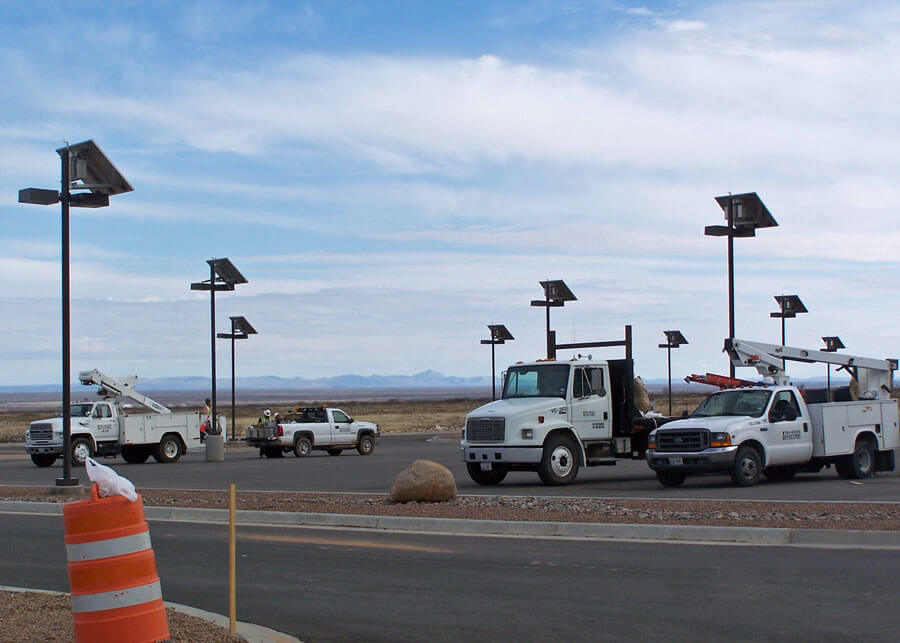
These large-scale solar outdoor lights have a higher upfront cost; however, they provide a quick investment return, especially if you are working on a site with no existing infrastructure. Most commercial solar lights have a single power assembly for each light, typically installed at the top of the pole. It provides power to the light fixture or electronic device all night.
Other operation profiles, such as split time, dimming, and the use of motion sensors, can be included; however, they should be sized to consider the worst-case scenario in operation when determining system sizing. Using alternative operation schedules can either increase the output of the fixture or decrease the amount of required solar and battery storage.
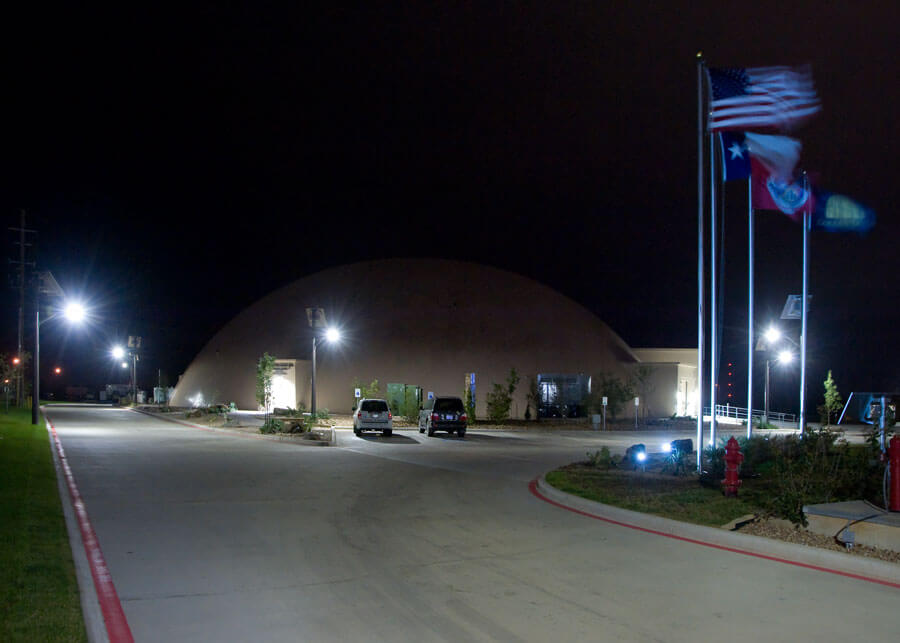
Finally, there are configurations where a single large power assembly operates multiple fixtures. This is most common in landscape or sign lighting projects. This is the only time when using solar that there is some underground wiring and trenching required; however, the power source is typically installed nearby, within 100’ or so of the light fixtures, and the wiring is much smaller than what is required for high power transmission lines.
Benefits of Solar Outdoor Lighting Systems
There are other benefits other than cost savings with solar outdoor lighting solutions, including lower maintenance costs, reduced operational costs, and a green alternative to fossil fuel dependence. These systems are great for areas where blackouts and brownouts are occurring as they do not rely on the energy grid for operation. Finally, the environmental benefits are vast since their lifespan is 25+ years, and many components are becoming more recyclable as technology improves.
As you can see, there are many benefits to using solar outdoor lighting systems. Not only will they work for small applications for residential installations but large-scale applications as well. Commercial manufacturers are able to utilize grid-scale fixtures with an off-grid advantage. Talk to your lighting professional when you are ready to install lighting on your next project and see if solar is a cost-feasible solution.