<img src="https://www.webtraxs.com/webtraxs.php?id=sepconet&amp;st=img" alt="">
Skip to content
772-220-6615         info@sepconet.com         CADDetails         ThomasNET

Why Solar Lighting Is Ideal for Nature Friendly Spaces

SEPCO 3/9/26 10:30 AM
Solar Lighting: The Eco-Friendly Solution for Outdoor Spaces
9:39
Why Solar Lighting Is Ideal for Nature Friendly Spaces

Landscape architects, lighting designers, engineers, and public‑sector owners increasingly face a dual mandate: make outdoor places safer and more welcoming after dark, while protecting night skies and wildlife, and do it with tight budgets. Modern solar lighting checks all three boxes.


It avoids trenching and utility connections (preserving soils and habitats), uses adaptive warm‑spectrum light to reduce ecological impact, and layers in smart controls to deliver light only when and where it’s needed, cutting O&M costs and skyglow. These design moves operationalize the DarkSky/IES Five Principles and align with the Model Lighting Ordinance (MLO), BUG ratings, and National Park Service best practices for natural lightscapes. 


What Makes a Space “Nature‑Friendly”?

Nature‑friendly spaces put ecology and visitor experience first. They acknowledge that artificial light at night disrupts nocturnal wildlife behavior, migration, breeding, and navigation, from bats and owls to insects and sea turtles, and that visitors also come to parks specifically to experience darkness and stars. Responsible lighting must therefore minimize skyglow, glare, and trespass, and respect sensitive habitats. 


The lighting industry has converged on tools and principles to achieve this:

  • DarkSky/IES Five Principles are useful, targeted, low-level, controlled, and warm‑colored.

  • Model Lighting Ordinance (MLO) with Lighting Zones (LZ0–LZ4) to tailor stringency by context.

  • IES TM‑15 “BUG” ratings to quantitatively limit backlight, uplight, and glare. 


The Case for Solar: Safety, Equity, and Resilience

Well‑designed lighting demonstrably reduces nighttime crime and increases real and perceived safety. A randomized experiment in NYC public housing found sizable crime reductions when additional lighting was provided. While that study used temporary grid‑tied lights, the safety mechanisms, visibility, and guardianship apply to solar systems that can be placed exactly where needed without grid access.


Equity matters too: grid‑free solar lights extend safe access to parks and trails in neighborhoods that historically lacked illumination, without long lead times or disruptive trenching, and continue operating during grid outages, boosting community resilience. Municipal case work and industry deployments emphasize off‑grid reliability, rapid install, and operational savings, directly supporting after‑dark recreation and social “third spaces.” 


Ecology‑First Lighting Design (What “Wildlife‑Friendly” Really Means)

Follow the Five Principles and translate them into specs: useful, targeted, low, controlled, warm. These are echoed by the National Park Service’s outdoor lighting principles (ensure lighting is necessary; light only where needed; use fully shielded fixtures) and are foundational to dark‑sky practice. 


Key elements:

  • Shielding & BUG: Choose fully shielded luminaires with U0 uplight where possible; use BUG ratings to control backlight/glare at property lines and habitats. 
  • Spectrum (CCT): Prefer warm‑colored light to limit short‑wavelength (blue) content that increases skyglow and disrupts circadian biology; public health guidance has cautioned against high‑CCT/blue‑rich streetlighting at night
  • Controls: Timers, motion/occupancy sensing, and dimming ensure light is on only when useful and at the lowest practical level—reducing ecological impact and energy use.

Coastal & wildlife contexts need extra care. Florida Fish & Wildlife (FWC) codifies the “Keep it Low, Keep it Long (560 nm+), Keep it Shielded” rules for sea‑turtle beaches; these are the gold standard for coastal parks, marinas, and dunes where hatchlings orient via natural light gradients. Peer‑reviewed research shows ALAN affects nesting density and hatchling orientation, supporting stringent coastal lighting practices and monitoring. 


Why Solar Specifically Fits Sensitive Sites

Solar lighting’s self‑contained design avoids trenching and new feeders—preserving soils, roots, and hydrology and avoiding construction disturbance in sensitive habitats or historic landscapes. It also eliminates electricity bills and operates during grid failures. DOE/NREL case materials for cities weigh solar street lighting’s financial models, implementation options, and policy integration, which are useful when building business cases for parks, trail networks, and campuses.


Because each pole contains its own power source and controller, it’s straightforward to implement adaptive dimming, curfews, and motion‑boost logic, aligning illumination with actual activity and ecological quiet hours—an operationalization of the Five Principles that’s harder to achieve with legacy circuits.


Cost, Construction & O&M: Where Solar Wins

  • CapEx: Avoiding trenching, conduit, handholes, cabinets, and utility fees often offsets higher unit costs of solar luminaires, especially along trails, waterfronts, and preserves. NREL’s municipal analysis highlights how ownership models and site conditions drive positive economics.
  • OpEx: Off‑grid systems have no electricity charges, and with networked monitoring, O&M is largely proactive (clean panels, check connections, scheduled battery replacement). DOE’s SSL program also documents how LED performance evolves with aging, informing realistic maintenance planning.
  • Resilience: Solar keeps critical paths lit during outages—supporting emergency egress and continuity of use. 

Use Cases & Case Notes

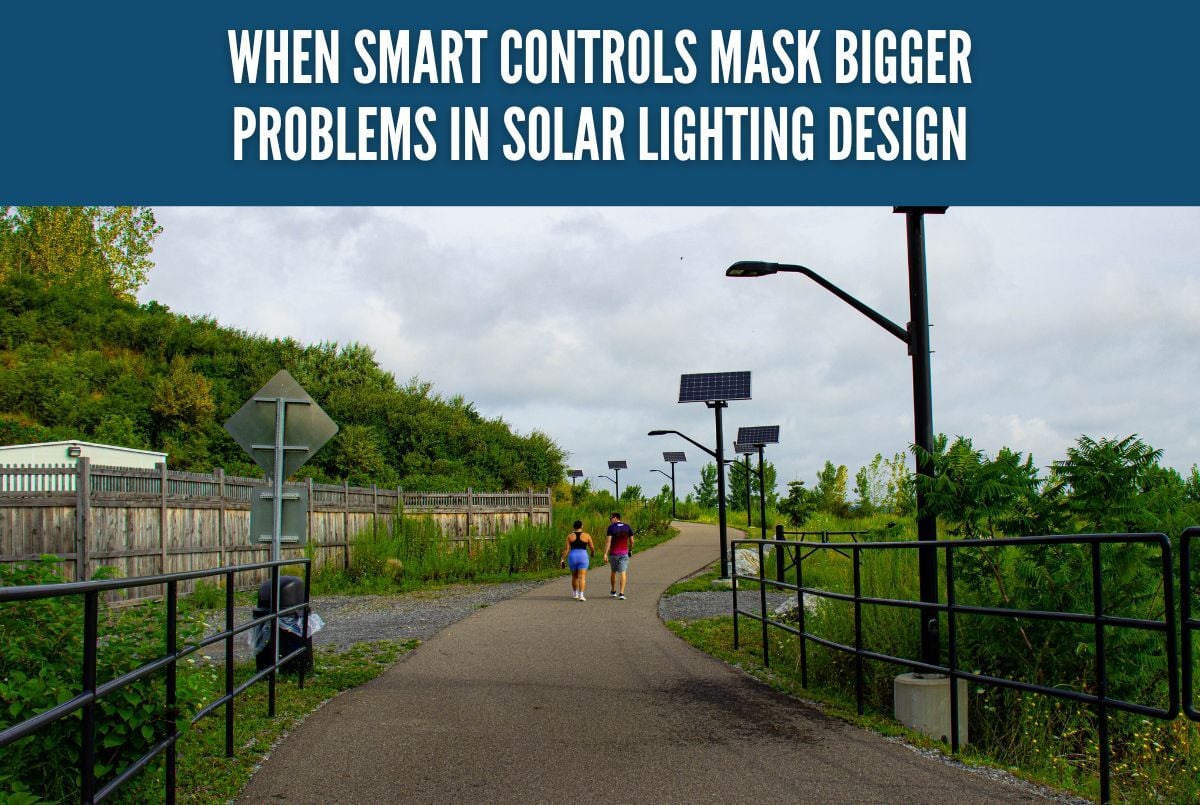
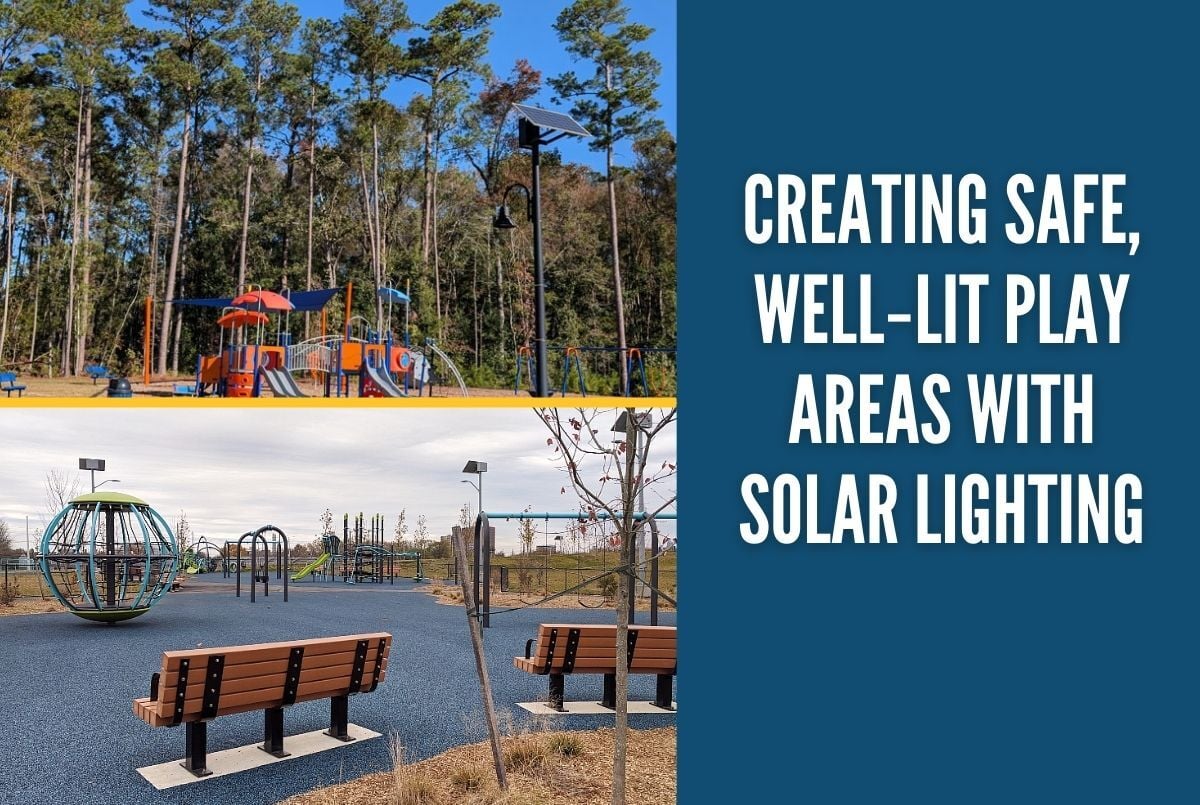
Parks & Trails: Place solar poles where they improve wayfinding, reduce trip hazards, and support evening programs. Purposeful spacing with Type II/III optics and motion‑boost (e.g., 20% baseline → 100% on approach) conserves energy and respects quiet hours. Municipal and vendor case notes show improved safety and rapid installs without habitat disruption. 


Coastal & Waterfronts: Use long‑wavelength (true amber/red) LEDs, full shielding, and fixture heights as low as practicable; verify wavelength specs (≥ 560 nm) and select products on FWC’s certified lists where applicable. Position fixtures landward and shield beach‑side views.


Natural Preserves & Dark‑Sky Sites: Start with “no light unless necessary.” Where lighting is justified for safety, specify U0, very low lumen levels, tight optics, curfews, and occupancy sensing to preserve astronomy and nocturnal ecology. Follow NPS principles and MLO LZ0–LZ1 intent.


Campuses & Municipal Corridors: For streets, paths, and plazas where grid extension is costly or unreliable, solar lighting fills gaps quickly and can be re‑sited later. City case work (e.g., Highland Park, MI) explores city‑wide deployments and policy integration.


Step‑by‑Step Spec Guide (Practical Checklist)

A. Establish Need & Zone: Confirm the task/route and Lighting Zone intent (LZ0–LZ2 typical for nature‑forward projects). Use MLO concepts to limit total site lumen allowance.

B. Optics, Levels & BUG: Choose fully shielded luminaires targeting U0; use optics (Type II/III) to keep light on path and out of habitat edges; verify BUG ratings match adjacency needs (e.g., low “B” near property lines/habitats).

C. Spectrum & Wildlife: Default to 3000K CCT for general nature‑friendly sites; for coastal/turtle areas, specify true long‑wavelength (≥560nm) amber/red LEDs and verify spectra.

D. Controls: Dimming profiles (e.g., 40% baseline after curfew), occupancy sensors, event‑based scheduling, and shutoff windows to align with quiet hours and wildlife behavior.

E. Poles & Placement: Use the lowest mounting height that satisfies uniformity/visibility; pull poles away from habitat edges and aim strictly downward; protect root zones.

F. Solar System Sizing & Autonomy: Specify days of autonomy for local climate, validated battery chemistry (e.g., LiFePO₄), and remote monitoring for health/soiling. Reference municipal financial/technical models when presenting to stakeholders.

G. Commissioning & Verification: Measure illuminance on paths, verify BUG and uplight = 0, confirm spectrum with manufacturer data, and field‑tune sensor thresholds and dimming. Use Park Service and DarkSky checklists as guidance. 


Policy, Standards & Compliance (What Reviewers Look For)

  • DarkSky/IES Five Principles (updated 2024) — the industry’s anchor for responsible outdoor lighting.
  • Model Lighting Ordinance (MLO) — Lighting Zones and lumen limits; encourages no uplight and uses BUG ratings for fixture acceptance. 
  • IES TM‑15/BUG — quantitative framework for backlight/uplight/glare control; cited by codes and energy standards.
  • National Park Service Principles — necessity, shielding, targeted/task lighting, and low levels to protect natural lightscapes.
  • Coastal wildlife guidance (FWC) — “Low‑Long‑Shielded” with true long‑wavelength sources for sea turtles. 
  • Health & spectrum context (AMA) — encourages low‑blue outdoor lighting and lower CCT to reduce glare and circadian disruption.


Takeaway

For parks, trails, waterfronts, and nature‑forward campuses, the best lighting is purposeful, quiet, and warm, and off‑grid solar makes it simpler to deliver. By pairing solar power with shielding, warm spectra, smart controls, and rigorous BUG discipline, you can improve safety, lower lifecycle costs, and protect the night, turning outdoor places into safe, inclusive third spaces that build community after sunset.